
Here is the paperwork on those loans. Each entry pairs one of the game's cards with something that actually happened: fines, verdicts, settlements or perfectly legal industry practice, sources included. The card index is not complete, and it never will be. Reality ships more expansions than we do.
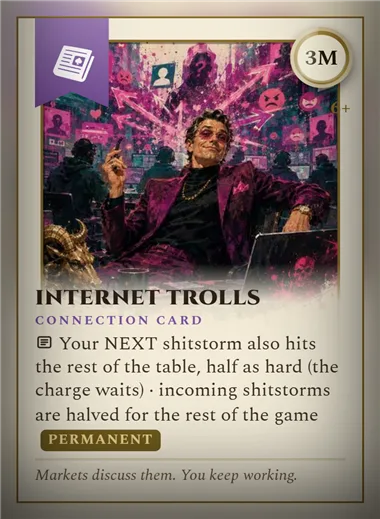
Paid comment armies
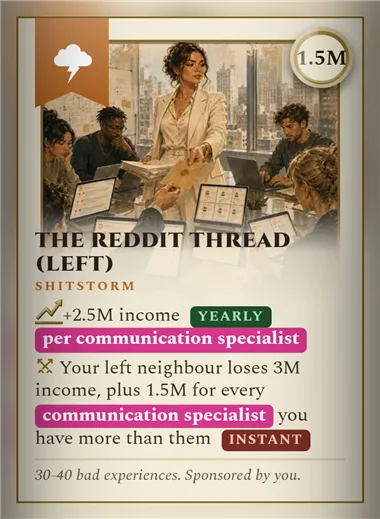
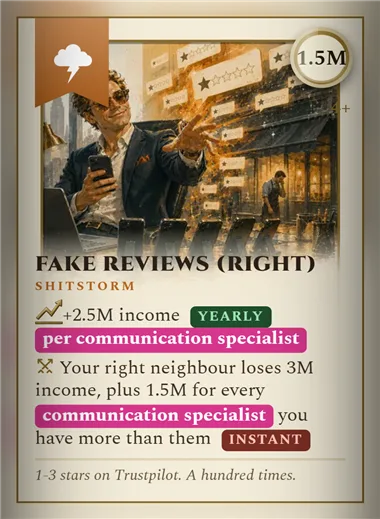
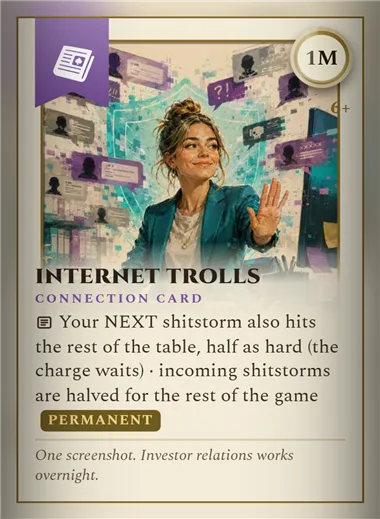
In 2013, Samsung was fined roughly 340,000 dollars by Taiwan's Fair Trade Commission for hiring students and bloggers to bash rival HTC in online forums. The agency running the campaign sent Samsung weekly reports with comment tallies and achievement rates. Trolling run as a consulting project, complete with KPIs and status meetings.
Sources: VentureBeat · Slate
The industry behind it got stung in 2013, when New York's attorney general set up a fictional yogurt shop in Brooklyn and asked SEO firms for help with its reputation: 19 companies ended up paying over 350,000 dollars over fake-review schemes, with reviews written in Bangladesh, Eastern Europe and the Philippines for between one and ten dollars apiece. The troll costs less than the yogurt.
Sources: New York Attorney General · NPR
Closer to home: in 2021 the Danish Chamber of Commerce reported a company to the police for fake Trustpilot reviews, and Trustpilot itself received a multi-million kroner fine for insufficient review controls.
Sources: Dansk Erhverv · DR
Protesters for hire
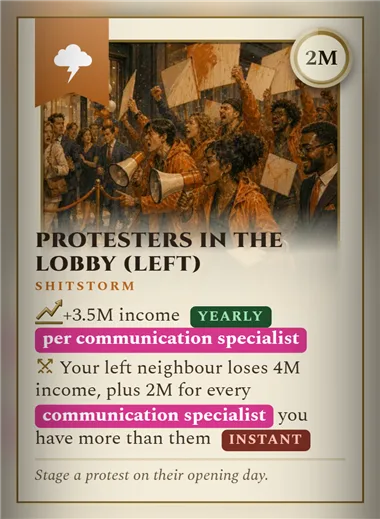
Crowds on Demand is an American company that has openly rented out protesters, fans and "concerned citizens" since 2012, at times for hundreds of dollars per participant. In 2018 the company was sued by a Czech investor who claimed a rival had hired protesters to march outside his private home.
Sources: Wikipedia · InfluenceWatch
The company got its biggest stage in New Orleans: the utility Entergy was fined five million dollars by the city council in 2018, after paid actors had appeared as concerned citizens at two public hearings and spoken warmly in favour of the company's new gas power plant. The actors were hired through the company's PR firm, which had ordered them from, yes, Crowds on Demand.
Sources: Utility Dive · The Lens
The agency pitches the story
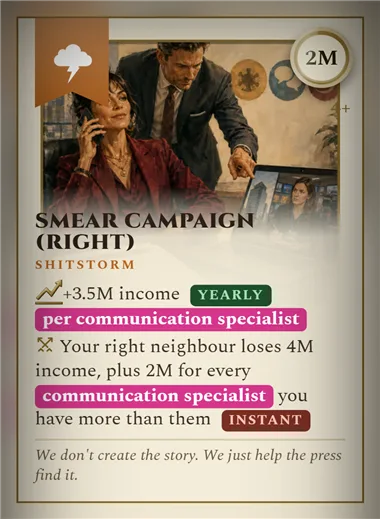
In 2011 Facebook hired the PR firm Burson-Marsteller to quietly pitch critical stories about Google's privacy practices to journalists and bloggers. The firm refused to say who its client was. One blogger published the whole email exchange, and Facebook had to admit it was behind the campaign. The playbook is classic: the agency talks to the press, the competitor gets the story, and the client's name appears nowhere.
Source: The Guardian
Denmark has delivered the genre in its purest form: when the newcomer BIOS won the ambulance tender in the Region of Southern Denmark from Falck in 2014, Falck drew up a strategy against its new competitor. Negative stories were covertly fed to the press and to employees, social media was put to work, and paramedics considering a move to BIOS were deliberately discouraged. The Danish Competition Council found that Falck had abused its dominant position to push BIOS out of the country; BIOS went bankrupt along the way. Falck accepted a fine of 30 million kroner and had paid 152 million in damages. This is exactly this card. We just painted it.
Sources: Danish Competition Authority · DR
The TV tip

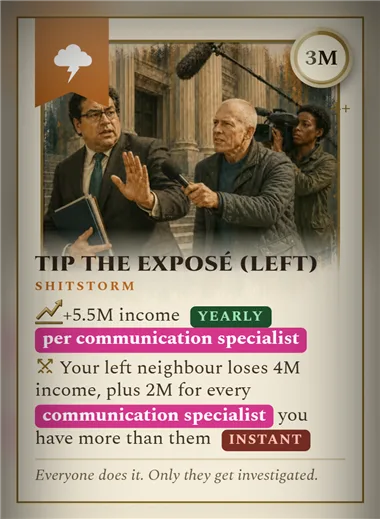
Consumer watchdog shows live on tips and have exposed everything from tax fraud to systematic scams. The shows do important work, and tips can come from anyone: whistleblowers, former employees, customers, of course, and, in the nature of things, competitors. Viewers rarely learn who sent them. In the game, there is no doubt. It is you. The card names are fictional, but the inspiration is two beloved Danish institutions: DR's Kontant and TV 2's Operation X.
Sources: DR on Kontant · TV 2 Operation X
The PR firm's own news site
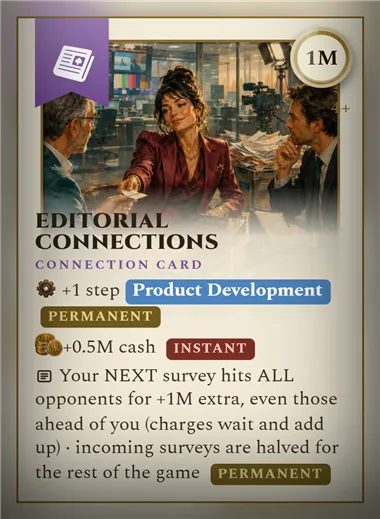
In 2018 Facebook hired the PR firm Definers, which planted negative stories about Google, Apple and others through its own news site, NTK Network, and tried to tie Facebook's critics to George Soros. Facebook fired the firm when the New York Times exposed the arrangement.
Sources: Forbes · TechCrunch
It can also bring down the agency itself: Britain's Bell Pottinger ran a covert campaign for the Gupta family in South Africa using fake accounts and the hashtag #WhiteMonopolyCapital. The industry's own association expelled the firm in 2017, and it collapsed shortly after.
The bought watchdog
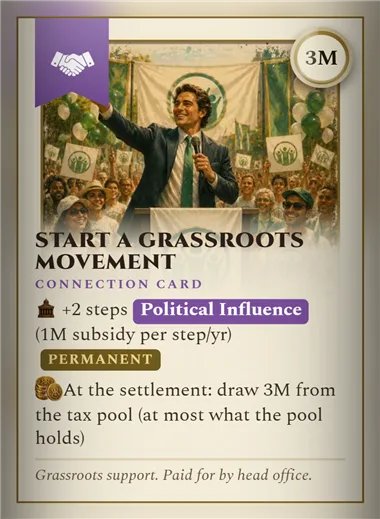
Walmart, Oracle and the country's largest mall operator backed the Free and Fair Markets Initiative, according to the Wall Street Journal: a seemingly independent grassroots organization whose actual purpose was to criticize Amazon. The tobacco industry used the same move in the 80s and 90s with artificial "smokers' rights" groups fighting smoking bans.
Sources: GeekWire on the WSJ report · The Drum
Fake accounts at scale
The Wiki-PR scandal of 2013: more than 250 user accounts were banned from Wikipedia for paid editing of company articles. Wikimedia subsequently tightened its rules so that paid editing must be openly disclosed.
Source: Wikipedia on the Wiki-PR scandal
And the Devumi case: the company sold millions of fake followers and likes from bot accounts, often built on real people's stolen identities. The New York Times exposed it in 2018, the company shut down the same year, and settlements with the New York attorney general and the FTC followed.
Sources: New York Attorney General · On the FTC settlement
Shell companies and tax havens
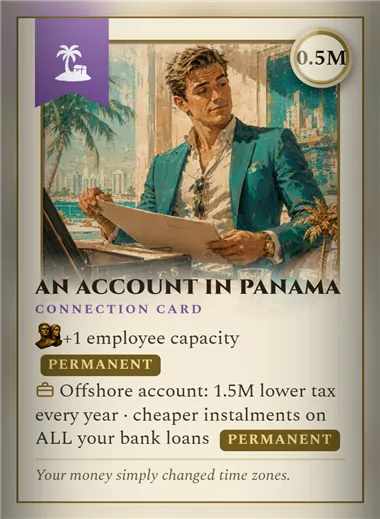
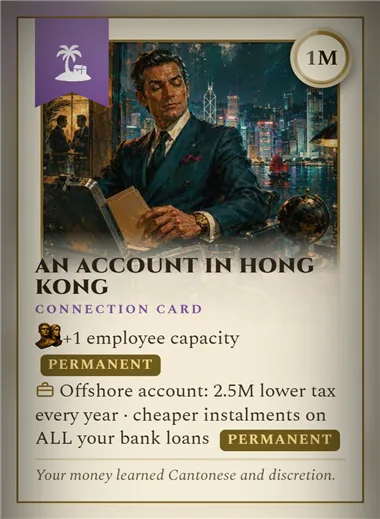
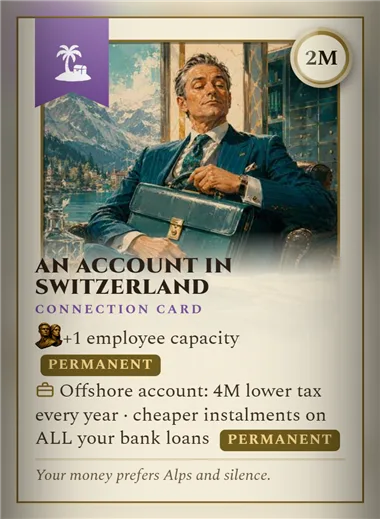
The Panama Papers leak of 2016: 11.5 million documents from the law firm Mossack Fonseca exposed shell companies belonging to politicians, corporations and celebrities in more than 200 countries. The Paradise Papers followed a year later.
Source: ICIJ
The Nordic contribution: through Danske Bank's small Estonian branch flowed roughly 200 billion euros between 2007 and 2015, mostly from customers outside Estonia. In 2022 the bank pleaded guilty in the US and paid more than two billion dollars.
Sources: SEC · Greenberg Traurig on the settlement
Dividend tax
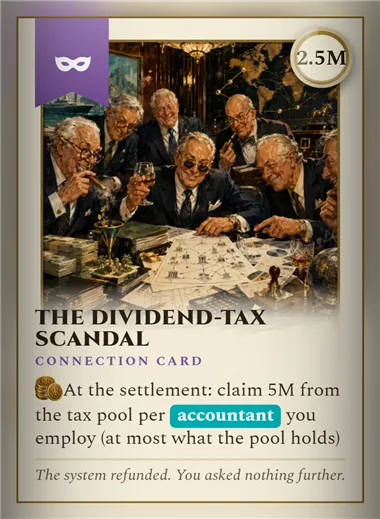
The Danish dividend tax case: until 2015, the Danish treasury was defrauded of roughly 12.7 billion kroner through illegitimate dividend tax refunds. The case led to trials in several countries and ranks among the biggest fraud cases in Danish history.
Source: Wikipedia on the CumEx files
In 2024 the main figure, Sanjay Shah, was sentenced to 12 years in prison by a Danish court, the harshest sentence for financial crime in Danish history. He has appealed.
Source: DR
Data breaches
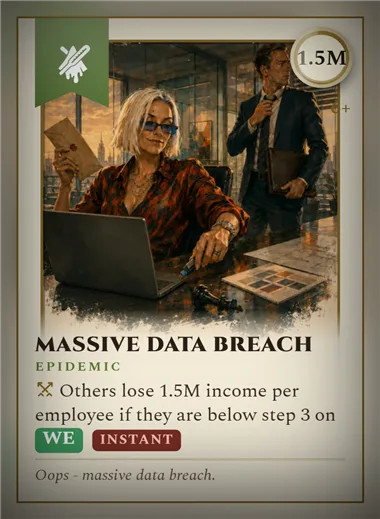
The 2017 Equifax breach hit 147 million people and ended in a settlement of at least 575 million dollars with US authorities.
Source: FTC
Uber went another way: when hackers took data on 57 million users in 2016, the company paid them 100,000 dollars to stay quiet and booked the amount as a bug bounty. The chief security officer was convicted in 2022 for covering up the breach.
Sources: US Department of Justice · Bloomberg
The wellbeing chat
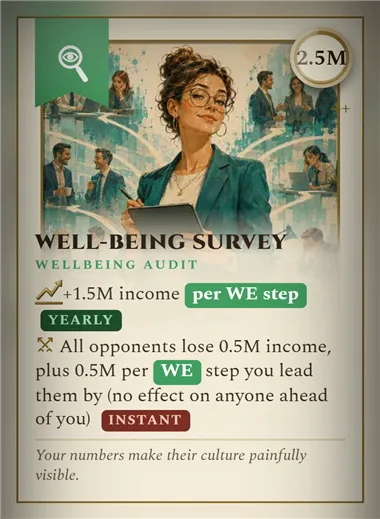
At H&M's service centre in Nuremberg, team leaders held welcome-back talks after holidays and sick leave. The notes on symptoms, diagnoses, family matters and religious beliefs were stored on a network drive where up to 50 managers could read them, and used alongside performance assessments. It came to light when a configuration error in 2019 made the drive visible to the whole company for a few hours. The Hamburg data protection authority imposed a fine of 35.3 million euros in October 2020. In the game the wellbeing survey is an attack on your neighbour. Here it pointed inwards.
Sources: European Data Protection Board · Courthouse News
Greenwashing

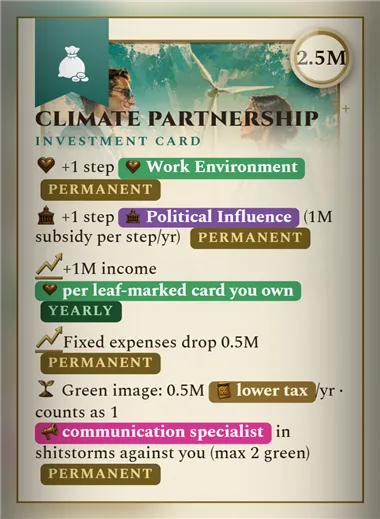
In the game, a polished green image can make a shitstorm bounce off, regardless of what goes on behind the facade. In reality, regulators have caught on: Danish and EU authorities have tightened documentation requirements for climate claims in marketing, precisely because the move worked so well.
Source: The Danish Consumer Ombudsman
And the price of getting caught is bearable: in 2019 Ryanair advertised itself as Europe's "lowest emissions airline", based among other things on an efficiency ranking from 2011. The UK advertising authority banned the campaign as misleading; the airline had meanwhile become the first carrier to enter the top ten emitters in the EU's carbon trading system, where the rest of the list was coal plants. The sanction was that the ads could not run again in that form. That was the entire sanction.
Sources: BBC · The ASA ruling
Fossielvrij NL sued KLM over its Fly Responsibly campaign. In March 2024 the Amsterdam district court found 15 of 19 claims misleading, partly because the effect of biofuels and forest projects was painted too brightly. The campaign had already ended, and the court imposed neither a fine nor a correction, but ruled that future climate claims must be honest and concrete.
Sources: The judgment (ECLI:NL:RBAMS:2024:1512) · Al Jazeera
The climate partnership can also be part of the permit. Chevron's Gorgon gas plant in Western Australia was allowed to open on the condition that at least 80 percent of the CO2 from the gas field would be injected underground over five years. Storage started in 2019, three years after gas production, and in 2021 Chevron conceded the target had been missed: about 30 percent had been stored. The company agreed with the state to buy 5.23 million tonnes of carbon credits and invest 40 million Australian dollars instead.
Sources: RenewEconomy · Energy Voice
The seven-year phone war
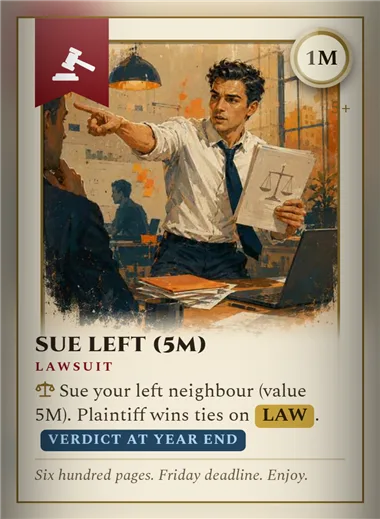
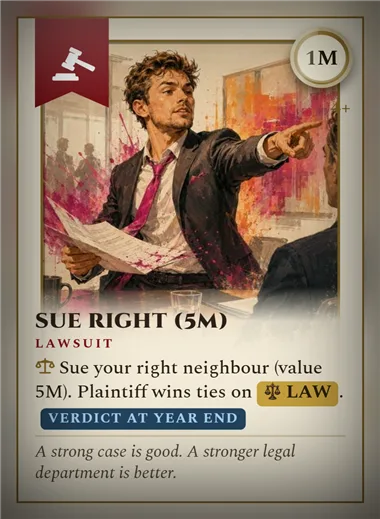
Apple and Samsung spent 2011 to 2018 suing each other across the globe while trading billions in components with each other at the same time. The case ended in 2018 with 539 million dollars to Apple, after which the parties settled. It became famous as the billion-dollar fight over, among other things, a rectangle with rounded corners.
Sources: Bloomberg · Insurance Journal
You can also fight without courtrooms: in the 2000s, Intel paid HP, Acer and Lenovo to cancel or delay computers running processors from its rival AMD, and to restrict where they could be sold. The European Commission calls these naked restrictions and imposed a fine of 376 million euros in 2023, which the EU's General Court later reduced to around 237 million. The product was ready. The manufacturer wasn't.
Sources: Euronews · Courthouse News on the reduction
The patent trolls
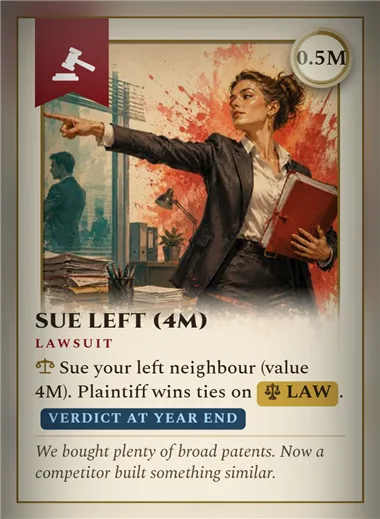
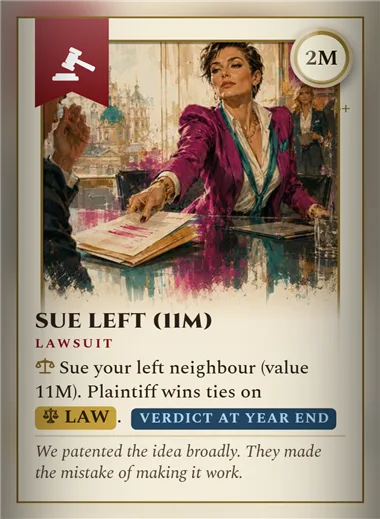
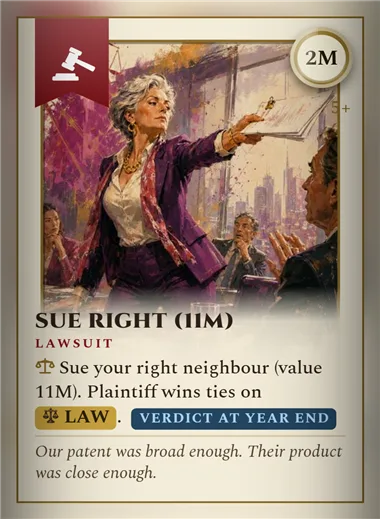
A patent troll builds nothing. It owns patents, preferably broad ones, and lives off charging licence fees to the people who do build. MPHJ Technology claimed its patents covered scanning a document and sending it as an email, and mailed letters to more than 9,000 small American businesses demanding a licence, according to the EFF around $1,000 per employee. Its law firm threatened more than 4,800 of them with a lawsuit within two weeks. No lawsuits had been prepared. The US Federal Trade Commission settled with the company in November 2014: MPHJ could no longer claim that many others had paid, or threaten litigation it had no intention of filing. The sanction was $16,000 per future letter of that kind. The money already collected was not returned.
Sources: Federal Trade Commission, 2014 · Electronic Frontier Foundation
Personal Audio claimed that a patent issued in 2012 covered podcasting as such, and demanded money from, among others, comedian Adam Carolla's podcast. The EFF asked the patent office to take a second look. In April 2015 the challenged claims were found invalid: CNN and Canada's CBC had put audio online the same way before the patent was filed. The appeals court affirmed in August 2017, and the US Supreme Court declined to hear the case in May 2018. The patent was broad enough. It just was not first.
Sources: Electronic Frontier Foundation · TechCrunch
The penalty clock
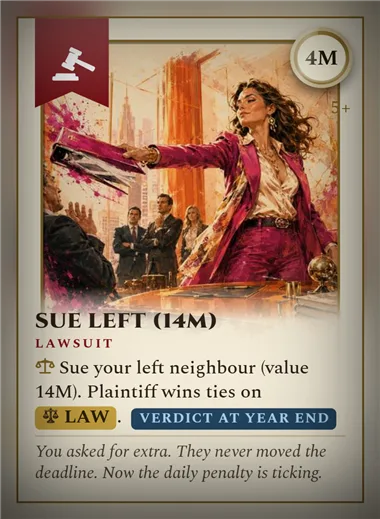
Liquidated damages are an agreed fine for every day a contractor hands over late. The trap on the card is as old as the building contract: order extra work along the way, then claim the penalty when the original date slips. In the English case Dodd v Churton from 1897, completion was set for 1 June 1892 with two pounds a week in damages. The owner's architect ordered extra work, the building was finished on 5 December, and the owner allowed a fortnight's extra time and claimed damages for 25 weeks. The Court of Appeal said no: whoever orders work that necessarily extends the build cannot at the same time hold on to the old date and charge for missing it. The rule is still called the prevention principle. Today the owner's changes generally entitle the contractor to more time. But only if they get it in writing. They forgot.
Sources: Herbert Smith Freehills on the prevention principle · Tony Marshall: Prevention and all that (International Construction Law Review)
The patent wall and the smear campaign
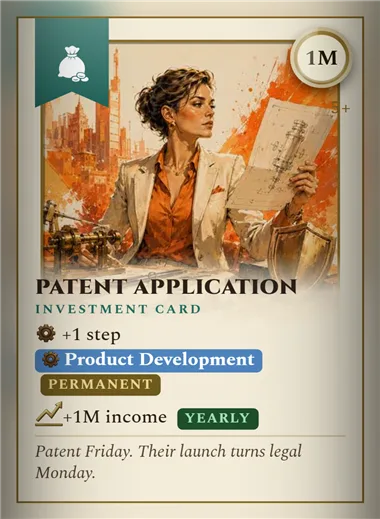
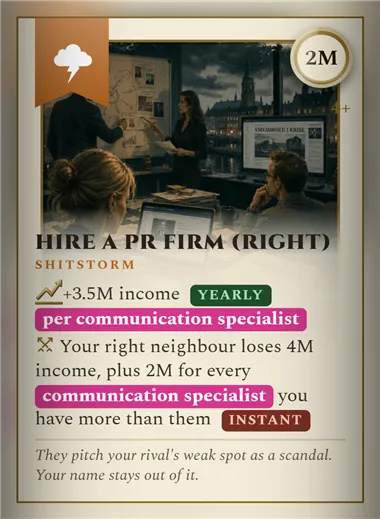
Teva held the patent on the multiple sclerosis medicine Copaxone until 2015. To keep generic makers out, the company filed a string of divisional patent applications and withdrew them whenever they were about to be struck down, so competitors never got a final decision to rely on. At the same time Teva ran a campaign against the rival product with misleading information to doctors, pharmacists and authorities. In October 2024 the European Commission imposed a fine of 462.6 million euros. Teva has appealed, so the fine is not final. Two of the game's attacks in a single case.
Sources: European Commission · Teva's statement on the appeal
The dumpster
In 2000 Oracle admitted to hiring private investigators who tried to buy the trash of organizations arguing Microsoft's case during the antitrust trial. The detective agency offered the cleaning staff 1,200 dollars for the garbage. Larry Ellison later called it a civic duty.
Sources: Time · The Register
HP went a step further in 2006: the board chair had private investigators obtain phone records of journalists and board members by impersonating them. The chair had to step down, one investigator pleaded guilty, and HP settled with the journalists it had surveilled.
Sources: Wikipedia on the HP scandal · Washington Post
And the card indexes are still being kept: in 2019 Le Monde revealed that Monsanto's PR firm had maintained lists of around 200 French politicians, journalists and scientists, with contact details, opinions and a score for their stance on the company's products, ready for use ahead of the EU's glyphosate vote. Similar lists existed in six other countries. Bayer, which had bought Monsanto, apologized while initially noting that nothing suggested the lists were illegal. Two years later, France's privacy regulator fined Monsanto 400,000 euros over the handling of them, in part because the people listed were never told. The card index was legal. Keeping the people in it in the dark wasn't.
Sources: BBC · Corporate Europe Observatory · The CNIL decision
Threaten a lawsuit
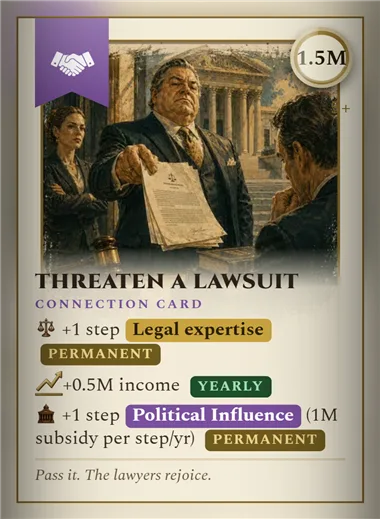
When Financial Times journalists dug into the payments company Wirecard, the journalists were reported to the police by Germany's financial regulator for market manipulation, and short selling of the stock was banned. Eighteen months later 1.9 billion euros were missing from the books, the management was on the run, and the charges against the journalists were dropped: their reporting was accurate.
Sources: Wikipedia on the Wirecard scandal · ESMA on the short ban
And while the journalists were being investigated, Chancellor Angela Merkel spoke up for Wirecard on a state visit to China, after a meeting with a former minister whose firm advised the company. The parliamentary inquiry later called her naive; she defended herself by saying that despite all the press reports, there was no reason to assume serious irregularities. The press reports were worth an investigation. It was just the journalists who got one.
Sources: Euronews · Business Standard (AP)
When Germany brought forward its nuclear phase-out after Fukushima in 2011, Sweden's Vattenfall sued both in the German constitutional court and before an international investment tribunal, with a claim running into the billions. The constitutional court ruled in 2016 that the companies were entitled to compensation, and in March 2021 the government struck a deal: 2.4 billion euros to four companies, 1.425 billion of it to Vattenfall, in return for all cases being withdrawn. No bribery, no scandal. Just a very strong legal card.
Sources: Vattenfall · Clean Energy Wire
The short report
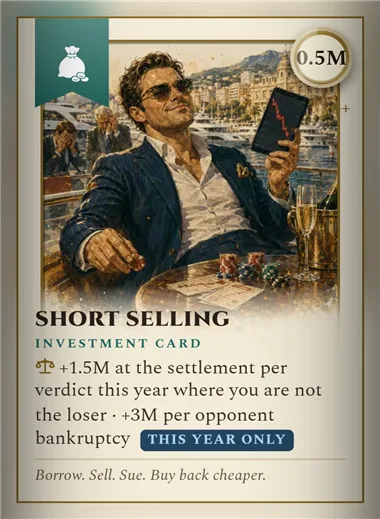
In 2020 the short seller Hindenburg Research published a report on the electric truck company Nikola, pointing out among other things that the company's promotional video showed a truck simply rolling downhill. The founder was convicted of fraud and sentenced to four years; in March 2025 he was pardoned by President Trump. The report was also a business: Hindenburg had shorted the stock and profited from the fall.
Sources: CNBC on the verdict · CNBC on the sentence
The lookalikes
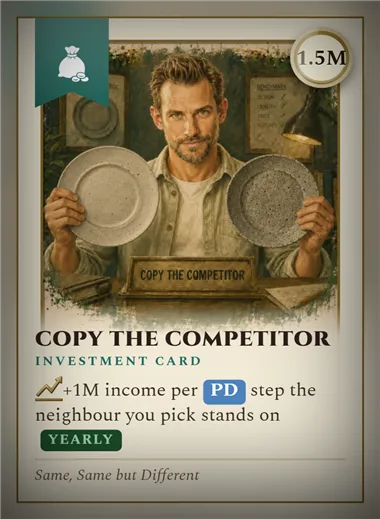
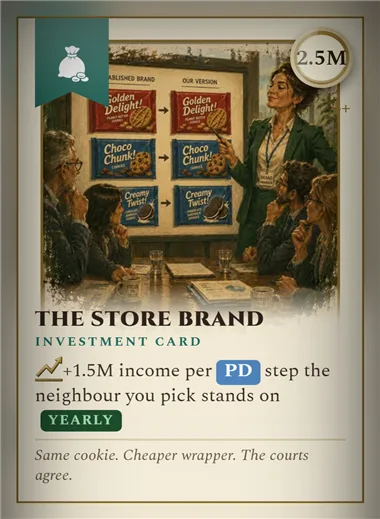
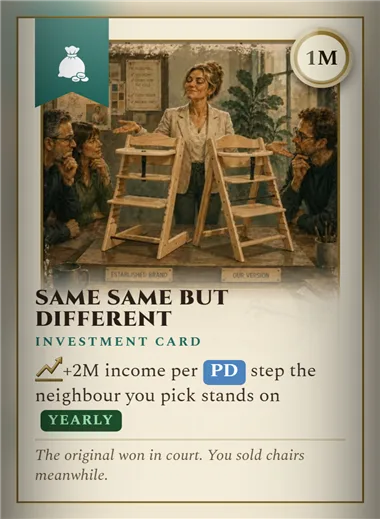
Lookalike products are a billion-dollar industry, and the courts cut both ways. The cider: Thatchers won its January 2025 appeal against Aldi's lookalike, with the court finding the similarity was meant to tell shoppers "like Thatchers, only cheaper". The cookies: Oreo maker Mondelez sued Aldi in May 2025 over copied packaging, and that case is still running. The chair: Stokke has won copyright cases over the Tripp Trapp chair in several countries, but lost the trademark on the shape itself at the EU Court of Justice.
Sources: IPKat on the Thatchers ruling · CNN · INTA on Tripp Trapp
And the Danish ceramics war: the Maritime and Commercial Court ordered TV nutritionist Christian Bitz and wholesaler F&H to pay 6.4 million kroner to ceramicist Kasper Würtz, because 15 products in Bitz's stoneware series were imitations of Würtz's handmade ceramics. The case ended years later in a confidential settlement.
Sources: DR · Jyllands-Posten
Paid by your debt
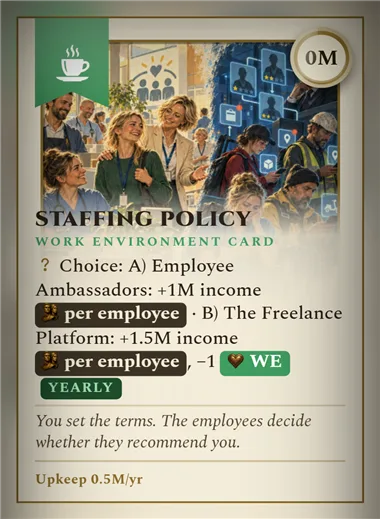
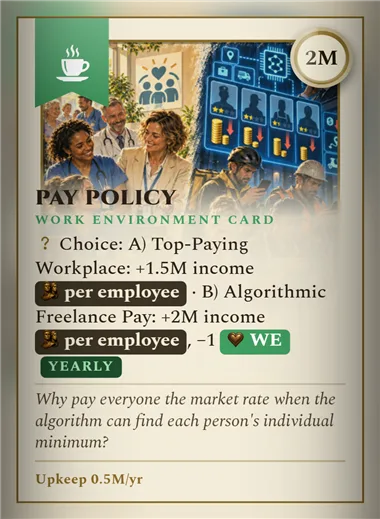
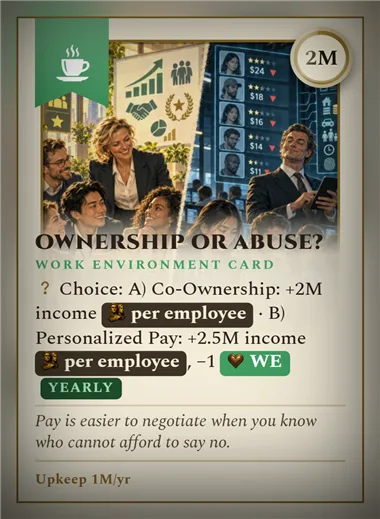
First the permanent staff were let go and hired back as temps. Then the temp agencies were replaced by a couple of apps that now hold the whole market. And the apps buy data. According to Cory Doctorow's April 2026 write-up, built on law professor Veena Dubal's research into algorithmic wage discrimination, staffing apps for nurses check with data brokers how much credit card debt an applicant carries, and whether it is delinquent, before setting the wage. The more debt, the lower the offer. Whoever needs the shift most gets it cheapest.
The practice has a name, surveillance wages, and a bill: in 2025 Colorado considered a ban on using surveillance data to set prices and wages, and the AI Now Institute published a report the same year on how to prohibit it. In the game it is the ruthless track of the Staffing Policy: The Freelance Platform in year 1, Algorithmic Freelance Pay in year 2 and Personalized Pay in year 3.
Sources: Doctorow, Pluralistic (2026) · Dubal, Columbia Law Review (2023) · AI Now Institute (2025) · Colorado HB25-1264
The insurance on the staff
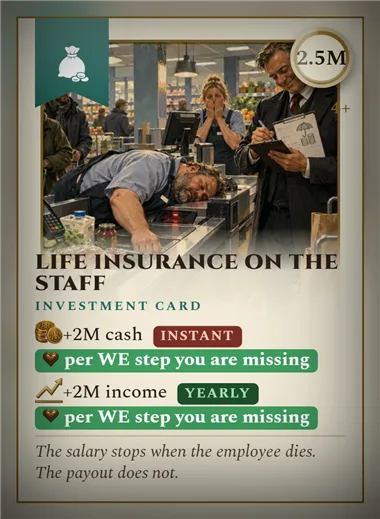
In the mid-1990s Walmart took out life insurance on more than 300,000 of its employees, from cashiers upwards, naming itself as the beneficiary. The employees were typically not told, and when one of them died the money went to the company, not the family. The industry had its own name for the product: dead peasant insurance. The point was a tax deduction on the loan-financed premiums, and when Congress closed it, Walmart stopped in 2000, saying the scheme was losing money.
Then the bills arrived. In 2004 the federal appeals court in Texas found that Walmart had no insurable interest in the lives of ordinary employees, and that the payouts belonged to the estates. Walmart settled for $10.3 million in Texas and $5.1 million in Oklahoma, where 73 estates shared the money. In Florida 132 employees had been insured, and the company had collected around $9.6 million on their deaths, $55,000 to $90,000 per policy. In the game the insurance pays most when the work environment is worst. It did in real life too. Nobody just wrote it on the card.
Sources: WFSU (2010) · Workday Magazine on the ruling · Law360 on the settlement
The deal not to steal each other's people
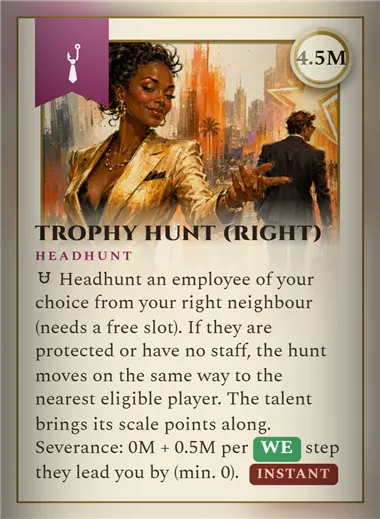
Apple, Google, Intel and Adobe made secret agreements not to recruit each other's employees. It held down wages for tens of thousands of engineers, and in 2015 a judge approved a 415 million dollar settlement for roughly 64,000 workers. In the game, the headhunt is an attack. In reality it was so valuable that the ban on it was a cartel.
Sources: TechCrunch · NBC News
The method can be upgraded from employees to entire competitors: the Danish pharmaceutical company Lundbeck paid four generic drug makers in 2002 to keep their cheap version of the antidepressant citalopram off the market. The European Commission imposed a fine of 93.8 million euros in 2013, and the EU Court of Justice upheld it definitively in 2021.
Sources: Bloomberg Law · Herbert Smith Freehills on the ruling
The European edition arrived in 2025. From 2018 to 2022 Delivery Hero and Glovo agreed not to recruit each other's employees, exchanged sensitive business information and divided markets between them. It began with Delivery Hero holding a minority stake in Glovo and ended in a full takeover. In June 2025 the European Commission imposed fines totalling 329 million euros in a settlement. It was the Commission's first ever fine for a no-poach agreement.
Sources: Herbert Smith Freehills Kramer · Slaughter and May
Fan the strike
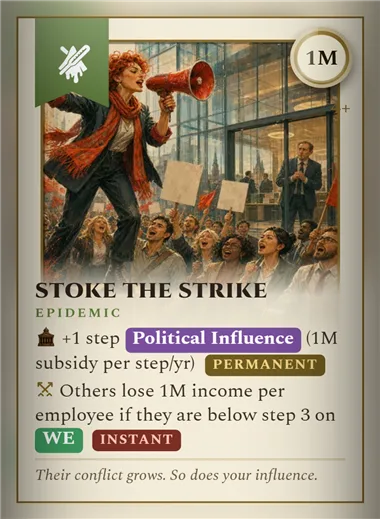
Tesla refused to sign a collective agreement in Sweden, and in October 2023 IF Metall's mechanics went on strike. Then it spread: dockworkers in Sweden, Denmark, Norway and Finland blocked Tesla cars, electricians dropped Tesla jobs, and the postal service withheld license plates for new Teslas. The conflict became one of Sweden's longest ever and ended in August 2026, after 1,021 days, when Tesla had bought out the last strikers. In the game, you are the one fanning your neighbour's strike.
Sources: The Register · Electrek
The cost-cutting knife
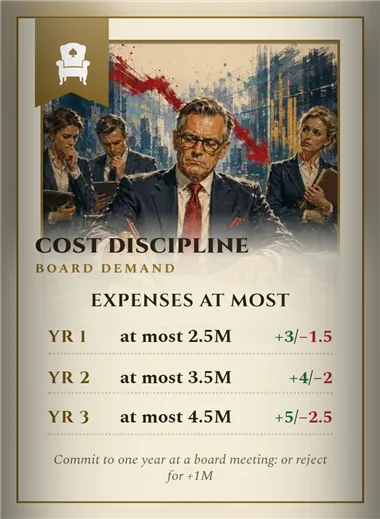
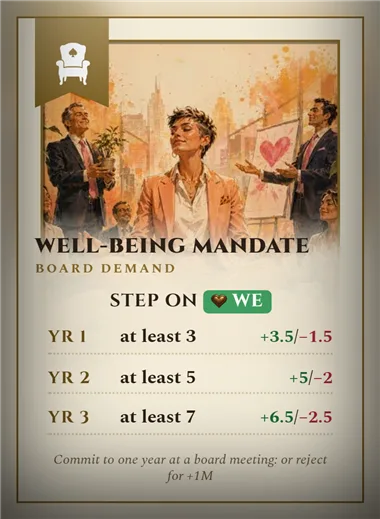
In 2006 France Télécom decided to shed 22,000 employees and move 10,000 others out of a workforce of about 120,000. Management could not dismiss the civil servants among them, so the plan was carried out through forced transfers, reorganisations and pressure. In 2008 and 2009, 35 employees took their own lives. Former chief executive Didier Lombard and his deputy were convicted in 2019 of institutional moral harassment, and in January 2025 France's highest court confirmed the principle: a company policy that knowingly degrades working conditions is a crime for those who decide it. The sentence was one year suspended and a fine of 15,000 euros each.
Sources: Clifford Chance on the ruling · The Conversation
Short on sales? We create them ourselves
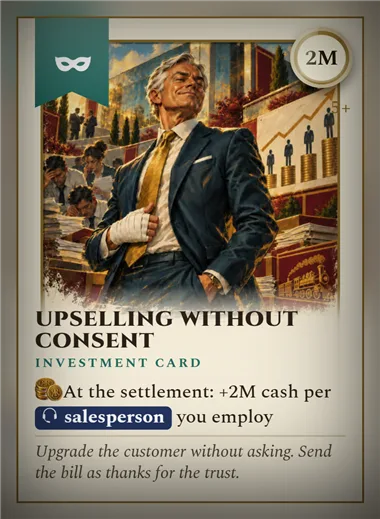
Wells Fargo measured its branches on products sold per customer, and the targets were set so they could not be met honestly. So the employees met them dishonestly: from 2002 to 2016 they opened deposit and credit card accounts in customers' names without asking, moved money between accounts and ordered cards nobody had requested, to hit the sales goals and collect bonuses. Some customers were charged fees on accounts they did not know they had.
The US consumer regulator, the CFPB, stepped in in September 2016: at least 1.5 million deposit accounts and 565,000 credit cards that may have been opened without consent, a $100 million fine, the largest the bureau had ever imposed, and $185 million in total together with the bank's supervisor and the City of Los Angeles. By then the bank had fired at least 5,300 employees, including branch managers and their managers. The chief executive left a month later.
In February 2020 Wells Fargo agreed with the Department of Justice to pay $3 billion to close the criminal and civil investigations. The bank admitted pressuring employees toward unrealistic sales goals and collecting millions of dollars in fees on accounts nobody had asked for. Prosecution was deferred against payment and good behaviour.
Sources: Consumer Financial Protection Bureau, Senate testimony 2016 · US Department of Justice, 2020
The non-compete
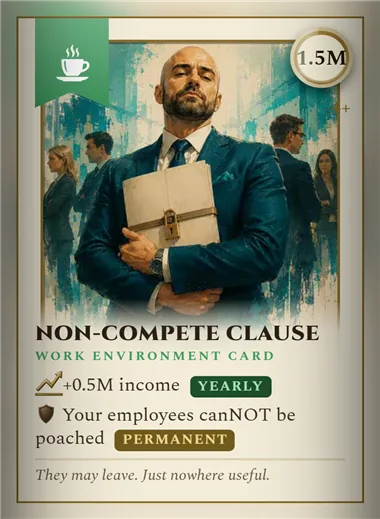
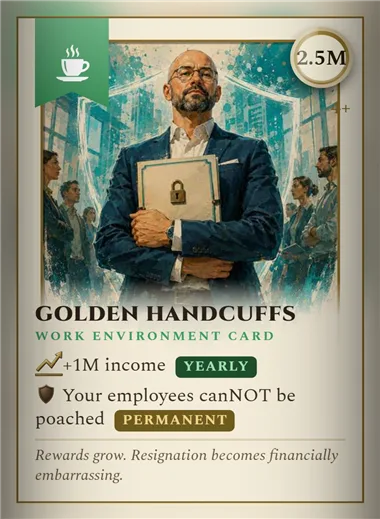
For years the sandwich chain Jimmy John's had hourly sandwich makers sign agreements barring them, for two years, from working for competitors within about two miles of any Jimmy John's store. The attorneys general of New York and Illinois challenged the clauses in 2016, and the chain settled, agreed to stop using them and paid 100,000 dollars in Illinois.
The consultants' report
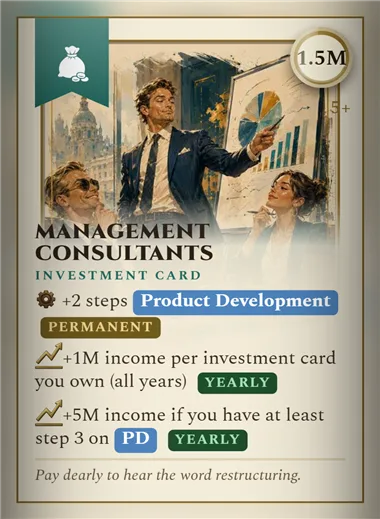
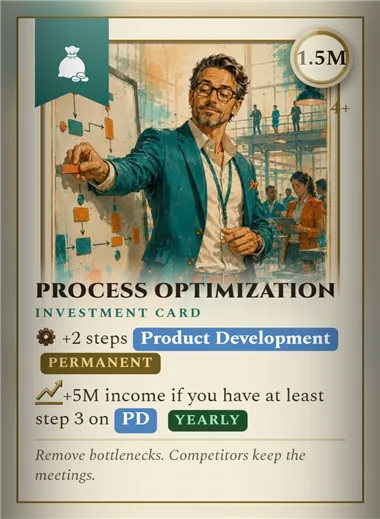
McKinsey advised Purdue Pharma on how to "turbocharge" OxyContin sales in the middle of the opioid crisis. Internally the plan was called Evolve to Excellence. The consulting firm has since paid 573 million dollars in settlements with US states and a further 650 million to the federal authorities.
Sources: NPR · US Department of Justice
The commissioned study
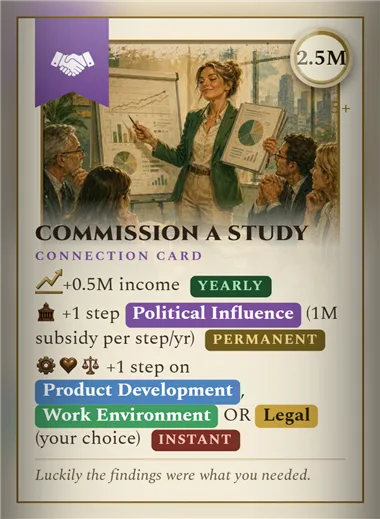
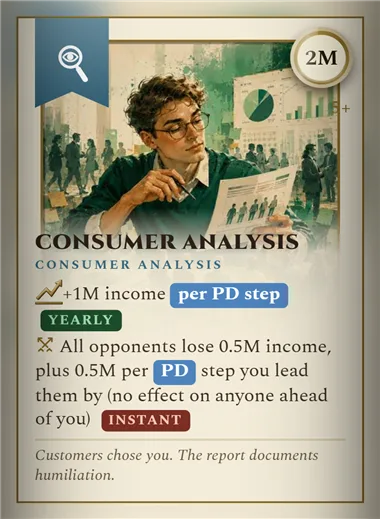
In the 1960s the sugar industry paid Harvard researchers for review articles that cleared sugar and pointed to fat as the culprit behind heart disease. The payment was never disclosed, and the articles shaped dietary advice for decades. The documents only surfaced in 2016. In the game, studies are attack cards. That is not a coincidence.
The sugar industry hid the payment. Today you don't have to hide anything: in Denmark, the Novo Nordisk Foundation, the commercial foundation that controls the country's largest company, handed out around nine billion kroner in 2023 for research, education and innovation among other things. The state's independent research fund handed out 1.7 billion for researcher-initiated work. Everything is in the open, much of it is excellent, and 2,252 researchers have still jointly warned that external funding can tie up universities' own budgets, steer research priorities and squeeze free basic research.
Sources: Videnskab.dk · Forskerforum · Altinget
The seat in the expert group
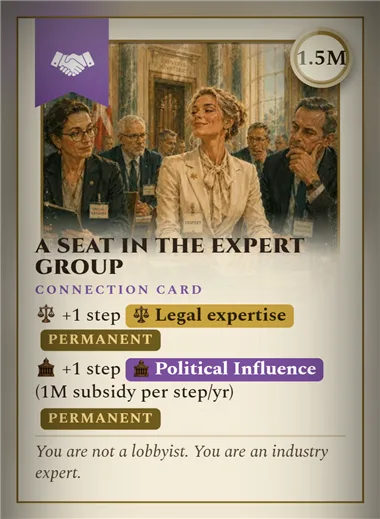
A partner at PwC Australia sat on the Treasury's advisory group on new rules against tax avoidance and had signed confidentiality agreements covering the briefings from 2013 to 2018. The information was shared inside PwC and used to advise clients on the rules before they were announced. When emails were tabled in Parliament in May 2023, the matter was referred to the federal police, and the Senate committee called it a calculated breach of trust. Access to the rule-making was the commercial advantage.
Sources: ABC News · Senate report: A calculated breach of trust
In 2020 the European Commission commissioned a study on how to build sustainability into banking regulation from BlackRock, the world's largest asset manager and a major investor in both banks and fossil fuel companies. The European Ombudsman found in November 2020 that the Commission had not provided sufficient guarantees against conflicts of interest and asked it to tighten its rules. She found no maladministration under the rules as they stood. The expertise and the self-interest sat at the same table.
Sources: European Ombudsman, case 853/2020/KR · Corporate Europe Observatory
Hire the minister's son
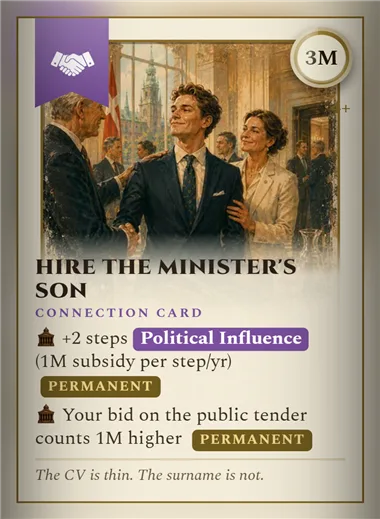
JPMorgan ran an internal program in Asia called Sons and Daughters: children of Chinese officials and executives got jobs and internships, prioritized by the business their parents could refer to the bank. The bank paid 264 million dollars in 2016 to close the case.
The Nordic parallel: Sweden's Telia paid more than 330 million dollars to a shell company owned by the Uzbek president's daughter to enter the country's telecom market. The 2017 global settlement cost 965 million dollars.
Norway contributed a domestic variant: while Erna Solberg was prime minister, her husband carried out 3,643 stock trades, which without her knowledge made her disqualified in a string of matters she handled anyway. The economic crime unit found no indications of insider trading and never opened an investigation. No case, no verdict.
And a Danish case from this year: when the British defence group Babcock set out to bid on Denmark's multi-billion purchase of new frigates, it hired the foreign minister's son, Bergur Løkke Rasmussen, to handle contact with Danish politicians and ministries. All of it was legal and happened in plain sight, and a purchase of this size goes through the government's coordination committee. His father sits on it. Spokespeople from several parties called the arrangement nepotism; he himself rejected any conflict of interest and ended his role with the company in August 2026. The frigate purchase remains undecided.
Sources: DR · TV 2 · Information (editorial) · DR on the exit
The revolving door
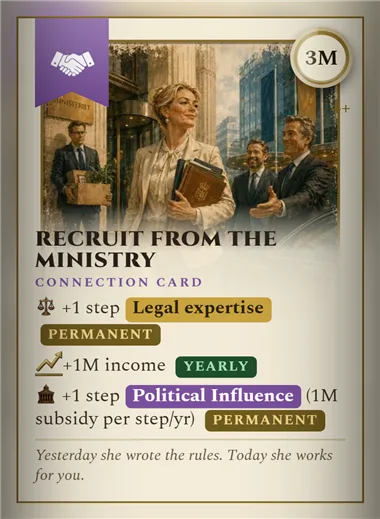
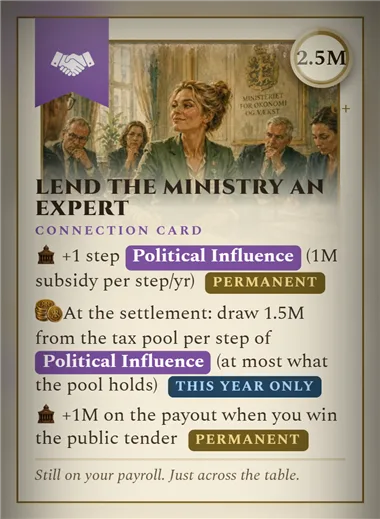
When former European Commission president José Manuel Barroso became chairman of Goldman Sachs International in 2016, advising on Brexit, it triggered a case at the EU ombudsman, a petition with 80,000 signatures and longer cooling-off periods for departing commissioners. The door swings both ways: companies lend experts to the system, and the system's people move out to the companies they used to watch.
Sources: LSE · Corporate Europe Observatory
The Uber Files leak also showed that former EU digital commissioner Neelie Kroes contacted senior Dutch officials on Uber's behalf while she was still within her cooling-off period and had been explicitly refused permission to work for the company. The EU's anti-fraud office OLAF investigated and found no basis to establish a breach of the rules: the contacts fell within her approved role as a Dutch startup envoy.
Sources: European Parliament · DutchNews
And the classic: a few weeks before Gerhard Schröder stepped down as German chancellor in 2005, the deal for the Nord Stream gas pipeline was signed with Schröder and Putin looking on. Shortly after he left office, it was announced that he would chair the company behind the pipeline, controlled by Russia's Gazprom. The door barely had time to swing.
Sources: BBC · Alliance for Securing Democracy
Australia's resources minister Martin Ferguson left the ministry in March 2013. In October the same year he became chairman of the newly created advisory board of the oil and gas industry body APPEA. The country's lobbying code prescribes an 18-month cooling-off period for departing ministers. Ferguson used six.
In the EU, Adam Farkas went in 2019 from executive director of the European Banking Authority, EBA, to chief executive of the financial industry's lobby group AFME. The European Ombudsman found in May 2020 that the EBA should have forbidden the move, because the conditions it attached did not match the risk, and that Farkas kept his access to confidential information for seven weeks after resigning. From the supervisor to those who work on the supervisor.
Sources: European Ombudsman, case 2168/2019/KR · Agence Europe
The lobbying firm in Brussels
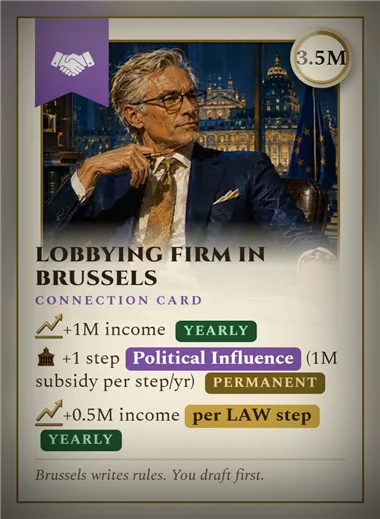
Lobbying is legal, and that is the whole point. In the game, the Connection cards are the legal lane; they are in reality too. The tech industry now spends a record 151 million euros a year influencing EU legislation, more than any other sector, with roughly 890 full-time lobbyists on the job in Brussels. Much of it is registered, and most of it is perfectly legal.
Sources: Corporate Europe Observatory · EUobserver
And it works. When the car industry was caught cheating on emissions tests in 2015, it responded with lobbying: the following year it convinced the Commission and the member states that the legal NOx limits could not be met on the road, and the limits were relaxed so that new diesel cars could legally emit more than double the limit until the end of 2020. The European Parliament's own inquiry pointed to lobby pressure as part of the explanation. Later measurements showed that 87 percent of new diesel cars could meet the original limit just fine. The cheating never became legal. It just became unnecessary.
Sources: European Parliament inquiry · Transport & Environment
Norway delivered the textbook case: when the government proposed a 40 percent resource tax on salmon farming in 2022, the fish farming billionaires answered with what the tabloid VG called the lobbying campaign of all time. The tax ended at 25 percent, and the salmon industry's party donations grew from a few hundred thousand to 18 million kroner ahead of the next election. Set against the difference between 40 and 25 percent of an entire industry's profits, it is probably close to the best-yielding campaign in Norwegian history.
Sources: VG · Ræder Bing on the vote
Write the bill yourself
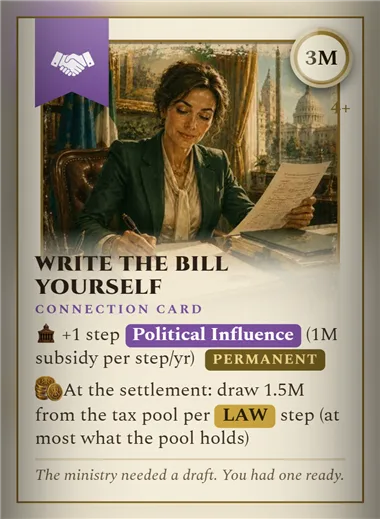
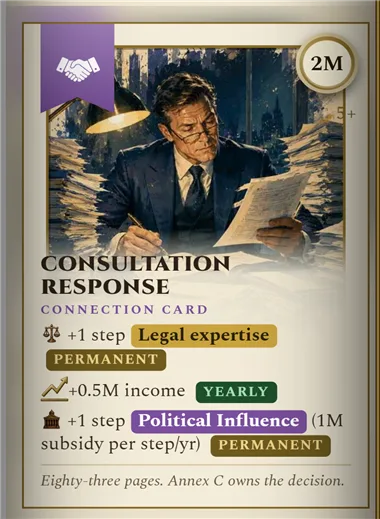
An investigation by USA Today, the Arizona Republic and the Center for Public Integrity found more than 10,000 bills in US state legislatures copied almost word for word from templates written by interest groups and corporations. More than 2,100 of them became law.
Source: Center for Public Integrity
The EU edition was caught with the copier running: during the negotiations on the data protection regulation, the LobbyPlag project showed that MEPs had submitted amendments copied word for word from lobby papers written by, among others, Amazon and eBay; a single Amazon document contained 41 pages of ready-made amendments. The law in question was the GDPR. The one that protects your data.
Sources: Privacy International · Corporate Europe Observatory
Paid questions in the chamber
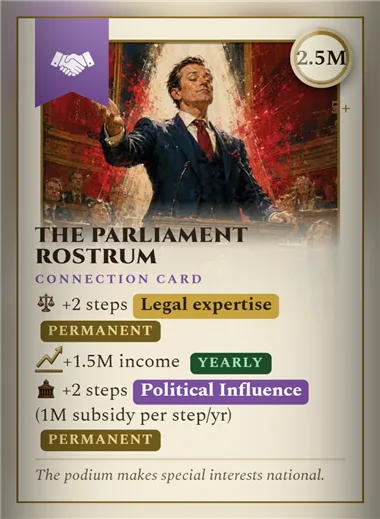
Cash for questions, 1994: Two British MPs took money, up to 2,000 pounds per question and reportedly delivered in brown envelopes, to ask questions in the House of Commons on behalf of the owner of Harrods. The scandal ended their careers and cost their party one of its safest seats.
Sources: Yahoo News UK · Tobacco Tactics (University of Bath)
The methods have been updated since 1994. During the pandemic, two German CSU politicians brokered face mask deals for the state and took millions in commission. Germany's highest court ruled in 2022 that this was not criminal bribery, since the parliamentarians had merely used the authority of their mandate and their contacts, and the seized millions were paid back. Not to the state. To the politicians.
Sources: Legal Tribune Online · t-online
And the brown envelopes still exist. They have just grown into suitcases: in 2022 Belgian police found more than one and a half million euros in cash around the European Parliament, including a suitcase carried by a vice-president's father. The affair was named Qatargate. More than three years on it is still waiting for its trial: the investigating judge had to step aside over a possible conflict of interest, the investigation remains open, and the accused deny all charges. The suitcases were the fastest-moving part of the entire case.
Sources: Wikipedia on Qatargate · Euronews
The campaign chest
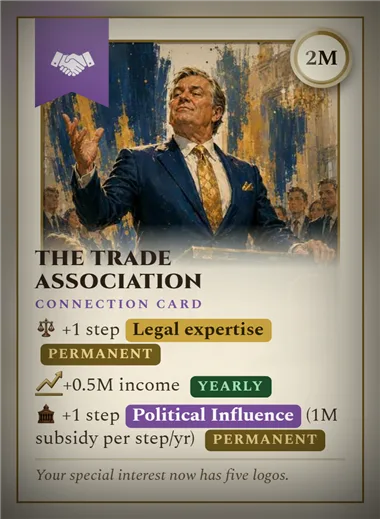
Across Europe, political influence rarely arrives in a brown envelope. Companies, trade unions and industry groups finance parties, sponsor political events, join business networks and employ professional lobbyists to ensure that their interests are heard. The rules differ from country to country, but the transaction is familiar: provide money, expertise or access, and receive a place in the political conversation.
This is not necessarily corruption. It is how organised interests participate in politics. Those with the largest campaign chests simply participate more efficiently.
According to international corruption rankings, Denmark has almost no corruption. What we have instead is networking. The rules say parties must disclose the name of any donor giving more than roughly 20,000 kroner. In 2019 it emerged that a politician from the party Venstre had received 100,000 kroner from the same owner, paid through five different companies at 20,000 apiece. The name stayed below the disclosure threshold under the interpretation of the rules used at the time; legal scholars debated whether it was circumvention, but no case followed. That was precisely the point.
In the 2022 election, the Moderates party received large donations whose senders were never published, and four parties afterwards demanded the rules be changed. Meanwhile the fund behind some of the world's largest offshore wind farms supported candidates from six different parties with 21,500 kroner each, just under the disclosure threshold. When the opposition later wanted to know whether offshore wind investors had received special treatment, party leader Lars Løkke Rasmussen was called before a parliamentary committee; the fund denies giving special support to anyone.
The arrangement is not confined to Venstre and the Moderates. Socialdemokratiet operated Erhvervsforum Vækst, where organisations paid 20,000 kroner a year for meetings with leading politicians. In 2021, it emerged that the Danish Dental Association had referred to its paid membership while seeking a meeting with the incoming health minister. Transparency International Denmark called it paid preferential access and corruption. That was the organisation's assessment, not a court ruling.
Sources: Transparency International Denmark · Altinget
Elsewhere, the arrangement is advertised openly. Liberal Alliance's business club offers companies meetings with its parliamentary group, monthly political briefings and an opportunity to influence policy development while supporting the party's campaigning. The annual fee is 19,500 kroner plus VAT. The Conservatives offer businesses "special access" to the party and meetings with senior politicians for 5,000 kroner a year, with the proceeds funding local political work.
Sources: Liberal Alliance · The Conservative People's Party
None of these business clubs is secret, and their existence is not evidence of a crime. That is what makes the system so Danish: political access, campaign support and networking can occupy the same room without anybody agreeing on what to call it.
The Danish Agriculture & Food Council openly hands out millions in party support, on the grounds that nearly every other major organisation does it too. The argument is correct. In the 2026 election, which came to revolve around drinking water and pigs, Venstre could not convince voters that the party does not primarily represent agriculture's interests, according to the daily Information. The Council of Europe's anti-corruption body GRECO has called Danish party funding rules globally unsatisfactory for more than a decade. We call them grey zones. It sounds nicer.
Sources: Altinget · Information · DR on GRECO
The useful regulation
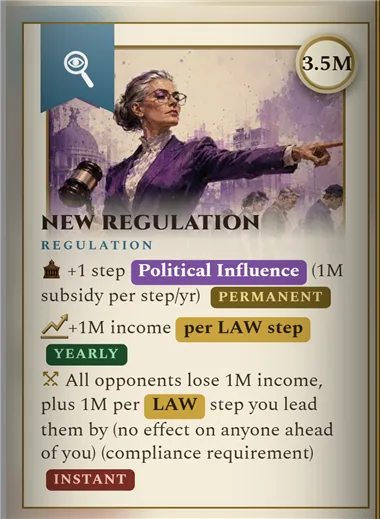
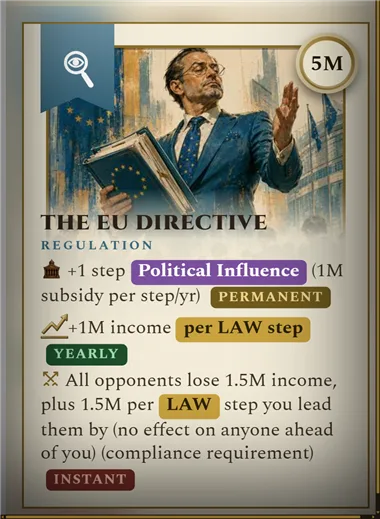
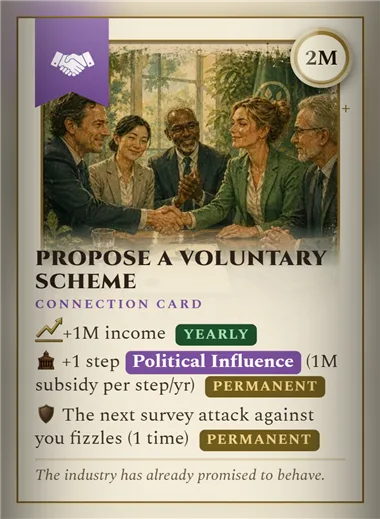
When the US Congress gave the FDA power over tobacco in 2009, market leader Philip Morris supported the law and helped write it. Competitors dubbed it the Marlboro Monopoly Act: the marketing restrictions froze market shares, and the market leader had the most to freeze.
Denmark has its own edition: when the CO2 tax was agreed in 2022, the standard rate landed at 750 kroner per tonne. A small group of the country's largest emitters, those with so-called mineralogical processes, get away with 125. The largest of them is the cement plant Aalborg Portland, Denmark's single biggest CO2 emitter, with a discount of up to half a billion. The argument is jobs and the risk of production moving abroad, and it is a real argument. It is also the argument that always wins.
Sources: DR · Altinget · Information
And the flip side of regulation is the bill: in the 1950s and 60s, the chemical plant Cheminova deposited toxic waste in the dunes at Høfde 42 on Denmark's west coast, with the authorities' permission. The depot is today one of Denmark's so-called generational pollutions; the cleanup is agreed at 728 million kroner. Cheminova's long-time owner, Auriga, a subsidiary of Aarhus University's research foundation, voluntarily contributed a one-off 125 million. Taxpayers pay the rest. The dumping was legal. Most of the bill is public.
Sources: Lex on Høfde 42 · Central Denmark Region · Dagens Byggeri
The think tank
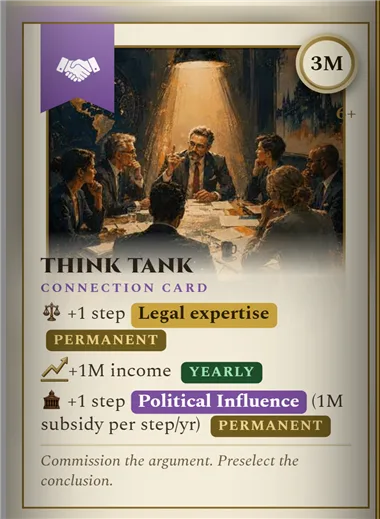
Over twenty years ExxonMobil channeled more than 36 million dollars to think tanks and groups sowing doubt about climate science, including the Competitive Enterprise Institute. 36 million for twenty years of doubt is cheap, by the way. The alternative was changing the business model.
Sources: Union of Concerned Scientists · DeSmog
Industry's own climate coalition, the Global Climate Coalition, spent the 1990s telling lawmakers and journalists that the role of greenhouse gases was "not well understood". In the coalition's internal 1995 report, its own scientists wrote that the scientific basis was well established and could not be denied. That passage was edited out before publication. They knew. They had written it down themselves.
Sources: Climate Investigations Center · DeSmog on the GCC
The friendship at city hall
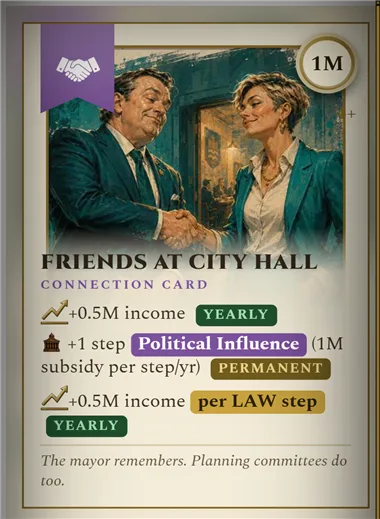
The Danish Farum case: Mayor Peter Brixtofte had the municipality pay nine million kroner over price for a sports hall renovation, in return for the contractor sponsoring the town's handball club with ten million. He got two years in prison for gross abuse of office, upheld by the Danish Supreme Court in 2008.
Sources: DR · Lex on the Farum case
The genre lives on, just with better lawyers: in the town of Fredericia, the mayor bought one of the municipality's building plots with an oral bid, although the rules required written ones. He resigned, the national oversight board stepped in, and one expert called it one of the biggest scandals in Danish local politics ever. Prosecutors dropped the criminal case, noting among other things that the municipality had followed its own practice for oral bids. The municipality's own practice. For selling the municipality's own plots. To the municipality's own mayor.
And in the Copenhagen district of Frederiksberg, the conservative mayor bought a 460 square metre grand apartment unusually cheaply and sold it just under four years later at a profit of 11 million kroner, while politically campaigning against housing speculation. No case, no verdict. At the next election his party lost the mayoralty it had held for more than a hundred years.
Source: Altinget
It will cost jobs
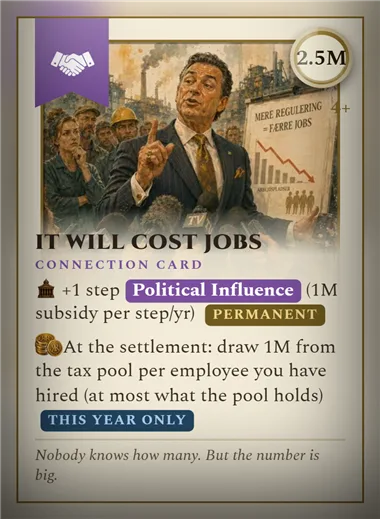
When Amazon put its second headquarters up for bid in 2017, 238 cities bid with tax breaks and grants. New Jersey alone offered seven billion dollars. The promise of 50,000 jobs made cities pay to be chosen.
Sources: Brookings · BuzzFeed News
The promises do not always hold: in 2017 Foxconn promised Wisconsin 13,000 jobs and 10 billion dollars of investment in exchange for billions in subsidies. In 2021 the deal was renegotiated down to 1,454 jobs and a subsidy cap of 80 million dollars.
Sweden has its own edition: the battery maker Northvolt promised green industry and thousands of jobs in Skellefteå and received state guarantees, EU support and nearly six billion Swedish kronor from the AP pension funds. Its 2025 bankruptcy became Sweden's largest in modern times: around 5,000 employees, debts of up to 80 billion, and the pension money is gone. The promise of jobs is the surest key to the public coffers. It works even when the factory doesn't.
In Denmark, the company does not even have to put itself out to tender: in Kalundborg, the biotech area around Novo Nordisk got its own train station as early as 2018, christened Biotekbyen Kalundborg Øst, financed jointly by the state railway agency, the municipality and the company, with a footbridge leading directly onto the company's grounds. Novo pledged four million kroner; the state and the municipality covered the rest. Then came plant expansions of first 17 and later 42 billion, and the municipal plan keeps designating new business zones to match, while the planning department has been staffed up to keep pace. The town is thriving, and everyone is happy.
Sources: Banedanmark · Danish Parliament transport committee · Kalundborg municipal plan 2025 · Kristeligt Dagblad
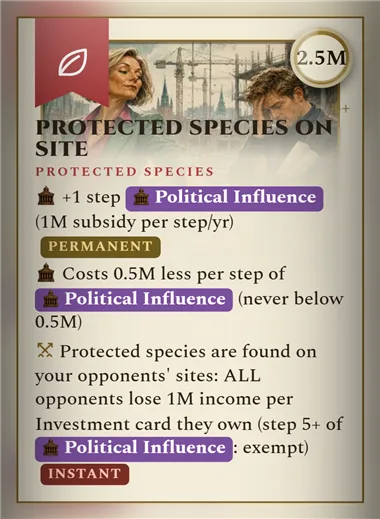
From 2019 to 2025 Alcoa cleared about 2,100 hectares of protected species habitat in the Northern Jarrah Forest south of Perth to mine bauxite, without the federal approval the law requires. In February 2026 the company entered into enforceable undertakings worth 55 million Australian dollars for restoration and protection of, among others, three species of black cockatoo. At the same time, limited clearing could continue for 18 months while the new approvals are processed, because the government used a national interest exemption. Alcoa itself puts its Australian employment at around 5,500 direct and indirect jobs. The environmental lawyers at EDO called the exemption a good deal for Alcoa.
Sources: Australia's environment minister · Environmental Defenders Office · Alcoa
State aid with a tax card
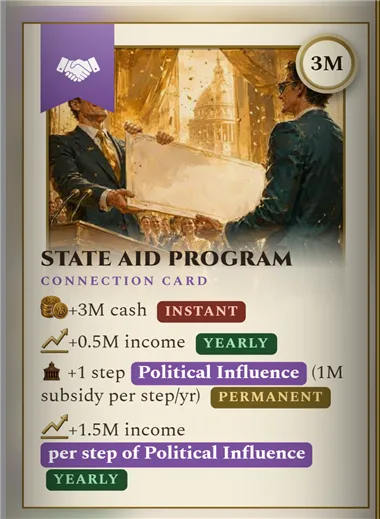
Ireland's tax rulings gave Apple an effective corporate tax rate as low as 0.005 percent. In 2024 the EU Court of Justice finally ruled the arrangements were illegal state aid, and Apple had to pay back 13 billion euros. The subsidies per step of Political Influence are the game's version of the same handshake.
And LuxLeaks: documents leaked in 2014 showed that Luxembourg had granted tailored, confidential tax deals to several hundred multinational companies.
Source: ICIJ on LuxLeaks
The Danish version requires neither a leak nor an island: Danish shipping companies pay tonnage tax, a levy based on the size of their ships instead of tax on their profits, roughly 150 million kroner a year for the entire industry, no matter how record-breaking the year. When the world's governments negotiated a global minimum tax, Maersk worked to keep shipping out of it, and the Danish government called that "nothing unusual". Apple had to go to Ireland. The shipping companies got it delivered at home.
Sources: TV 2 · DR · DR on the government's response
The Netherlands tried to hand out the gift in the open: in 2017 Mark Rutte's government wanted to abolish the dividend tax, around two billion euros a year that no voter had asked to give up. Released memos showed that Shell and Unilever had lobbied for the abolition during the government formation talks. The plan was dropped when it could not even keep Unilever's headquarters in the country, and Rutte has since called it one of his biggest mistakes. Not the proposal. That it never went through.
Sources: Dutch Parliament · TaxLive
The sun shines, the tax falls
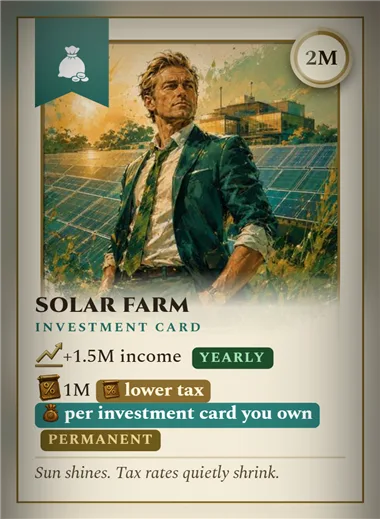
For years solar power was a poor business in Denmark. At the start of 2010 the whole country had about 4 megawatts installed. Then panel prices fell, electricity prices rose, and the tax rules did the rest: household systems of up to 6 kilowatts were exempt from electricity tax and, from 2008, from the PSO levy too, and under annual net metering the owner could on paper store the summer's power for winter and pay tax only on the difference. In 2012 Parliament added a 115 per cent depreciation allowance on investments, and it applied to private solar panels as well. By the end of 2012 capacity was about 400 megawatts, a hundredfold in three years.
The National Audit Office did the sums in 2014. The energy ministry had assumed 230 megawatts on the old scheme although 302 were already registered, and the cost of the support came out at least 1.8 billion kroner higher than Parliament had been told; the overall estimate to 2020 was 4.7 billion. Parliament closed the scheme in December 2012 and moved to hourly net metering, but existing systems were allowed to stay on the old terms for 20 years, until 2032. Systems above 6 kilowatts, on the other hand, got better terms than before.
The tax card remains. Power from your own solar panels used directly by the owner or a tenant is still exempt from electricity tax, and under the green tax reform of December 2020 companies could depreciate 116 per cent of new green assets bought up to the end of 2022. Fossil-fuelled machinery, passenger cars and ships were excluded. The agreement was struck by the government with the Liberals, the Social Liberals, the Socialist People's Party and the Conservatives, and cost the treasury around 1.1 billion kroner in 2022 alone.
Sources: National Audit Office of Denmark, report 25/2013 · Ministry of Taxation, bill L 178 (2020-21) · Danish Tax Agency, binding ruling on electricity tax
Cartels in the tenders
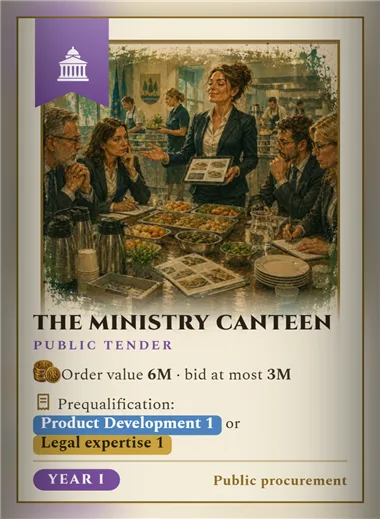

The Danish road marking case: the country's two largest road marking companies bid together as a "consortium" on the Road Directorate's tenders, with districts divided in advance and joint prices. The Supreme Court found the consortium illegal in 2019, and in 2024 the High Court found the violation criminal but waived the penalty: the companies had acted in excusable ignorance of the law. Guilty, no punishment.
Sources: Danish Competition Authority · On the criminal case
And the Atea case, the largest bribery case in Danish history: public officials received trips, dinners and equipment from a special account while their region bought IT for more than half a billion kroner from the supplier. Eight people were convicted at trial in 2018; the appeals ended mixed, and one former executive was fully acquitted in 2022 after a Supreme Court remand.
Sources: Danish Courts · TV 2
And cartels exist far beyond public tenders: currency traders from five major banks spent years coordinating trades and exchanging sensitive information in private chatrooms, and in 2019 the European Commission fined them a combined 1.07 billion euros. The chatrooms were called, among other things, Three Way Banana Split, Essex Express and Semi Grumpy Old Men. Satire is redundant here. The names were their own.
Sources: European Commission · CNBC
Access can also be personal. In April 2020 the UK health department set up a separate lane for offers of protective equipment referred by ministers' offices, parliamentarians and senior health officials. The National Audit Office found that one in ten suppliers in that lane won a contract, against fewer than one in a hundred in the ordinary queue. In January 2022 the High Court ruled that the lane breached the principle of equal treatment and was unlawful, while also finding that the three contracts examined would probably have been awarded anyway.
Sources: National Audit Office · Good Law Project on the ruling
Greenwashing at scale
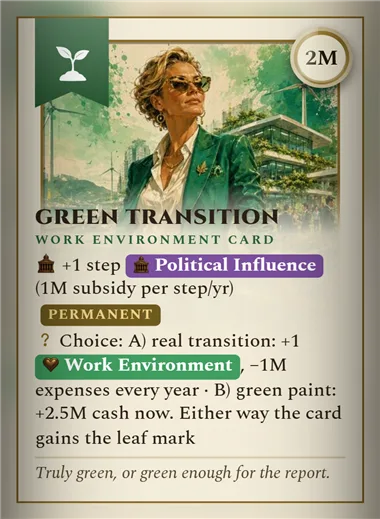
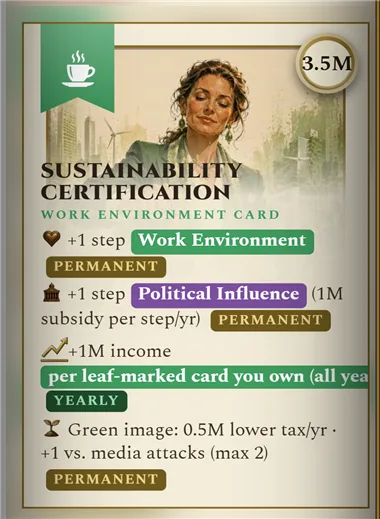
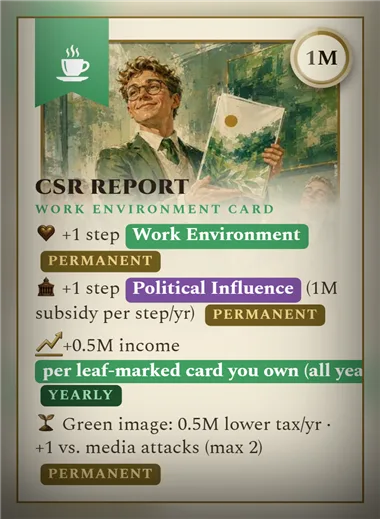
Volkswagen installed cheating software in eleven million diesel cars so they passed the test in the lab and polluted up to 40 times the limit on the road. The bill passed 30 billion dollars, and the company pleaded guilty to criminal charges in the US.
Sources: US Department of Justice · EPA
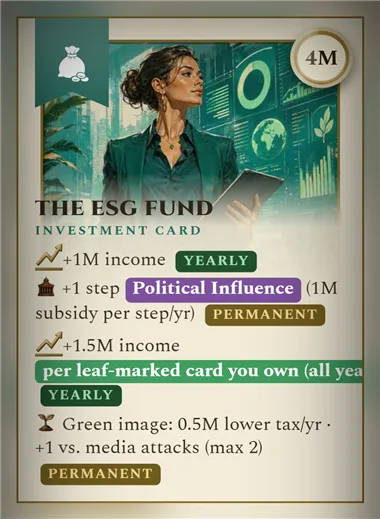
Fund giant DWS marketed itself as an ESG leader until police raided its Frankfurt headquarters. The fines ended at 25 million euros in Germany and 19 million dollars at the SEC, and the CEO stepped down. The case started with an internal whistleblower.
Sources: ESG Today · ESG Today on the SEC fine
All cases are described from publicly available sources such as fines, verdicts, settlements and press coverage. Where a case was dropped, settled or is still running, we say so, and an accusation is not a conviction. None of the companies, shows, parties or people mentioned have any connection to Ruthless Returns. The game is satire: the methods are real, the companies in the game are not.
Britain's Drax receives subsidies for burning wood pellets in its former coal plant. In 2024 the regulator Ofgem found weak procedures and inaccurate reporting on what kind of Canadian wood was used, and Drax paid 25 million pounds into a redress fund. Ofgem found no evidence that the biomass was unsustainable or that the subsidy certificates had been issued wrongly. The case was about the paperwork, not the wood.
Sources: Ofgem · Utility Week